Atherosclerotic cardiovascular disease (ASCVD) remains the leading cause of morbidity and mortality worldwide. While multiple factors contribute to its development, aging is an inevitable and predominant risk driver. For this reason, major clinical guidelines recommend that adults aged 40 to 75 years undergo a 10-year ASCVD risk assessment as a cornerstone of preventive care1.

In ASCVD risk assessment, calcium scoring has emerged as a critical marker, which offers objective and reliable measurement of coronary status2. Moreover, with the quantitative evaluation, multiple-ethnic studies had been conducted and created various databases that can be used for reference to deliver more confident future risk managements.


1. Arnett, Donna K., et al. "2019 ACC/AHA Guideline on the Primary Prevention of Cardiovascular Disease." Circulation, vol. 140, no. 11, 2019, pp. e596–646, https://doi.org/10.1161/cir.0000000000000678.
2. Wong, Nathan D. "Evolution of Coronary Calcium Screening for Assessment of Atherosclerotic Cardiovascular Disease Risk and Role in Preventive Cardiology." Current atherosclerosis reports vol. 24,12 (2022): 949-957. doi:10.1007/s11883-022-01073-z
Express Workflow

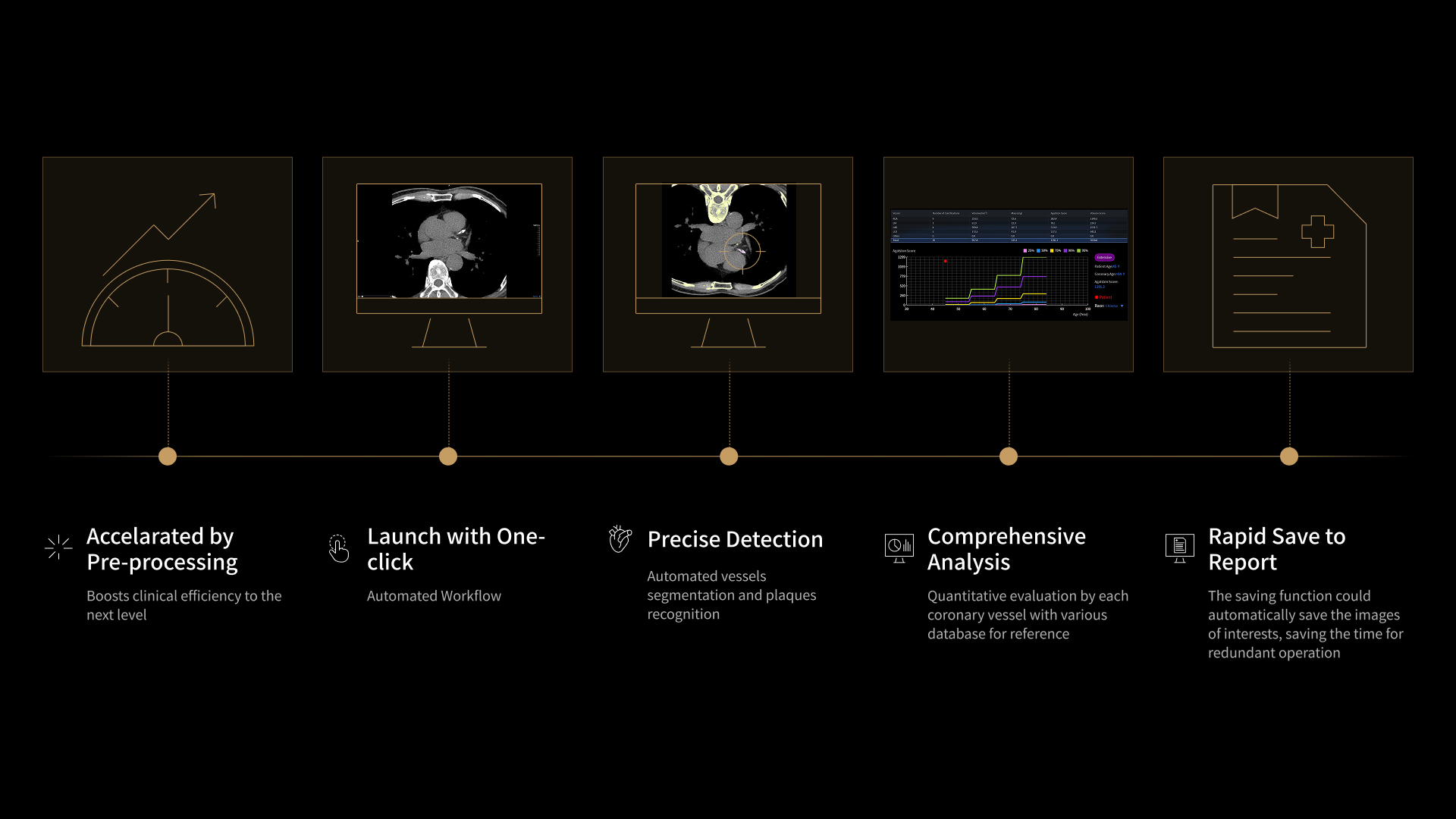
Pre-processing runs algorithms in the background based on user-defined rules, accelerating workflow by reducing data loading time and streamlining essential steps such as calcification identification and coronary vessel recognition. With Pre-processing, data loading time is cut dramatically—from minutes to just seconds.

Accelerated by Pre-processing

Pre-processing runs algorithms in the background based on user-defined rules, accelerating workflow by reducing data loading time and streamlining essential steps such as calcification identification and coronary vessel recognition. With Pre-processing, data loading time is cut dramatically—from minutes to just seconds.

In conventional workflows, radiologists must first identify the calcificaitons and then do the manual extraction and classification to the corresponding arteries across all the slices.

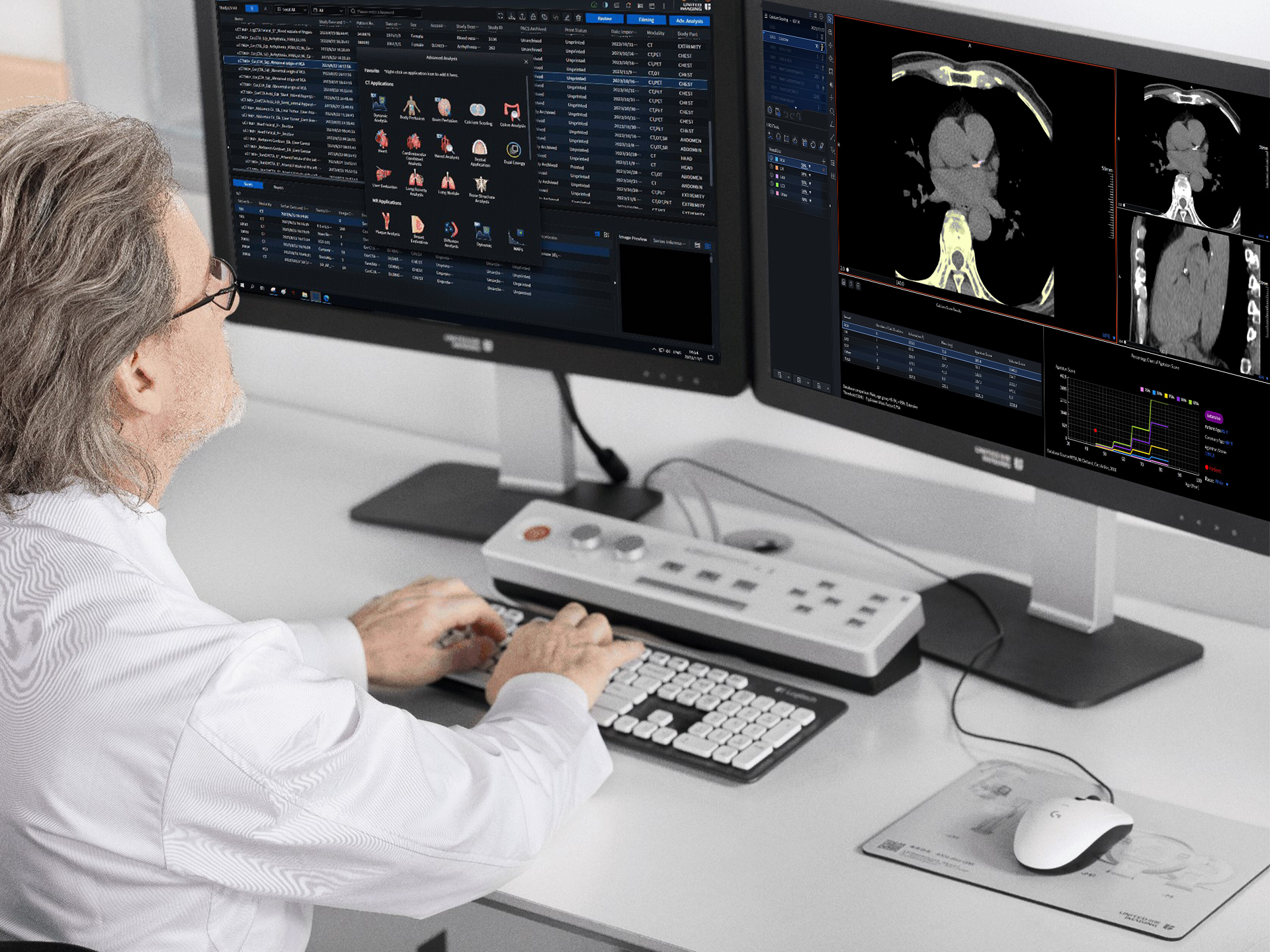
With uOmnispace™, calcium scoring is streamlined: calcifications are automatically highlighted for review, accompanied by a structured results displaying key parameters aiding in both comprehensive and efficient patient evaluation.

Seamless with Automation

In conventional workflows, radiologists must first identify the calcificaitons and then do the manual extraction and classification to the corresponding arteries across all the slices.

With uOmnispace™, calcium scoring is streamlined: calcifications are automatically highlighted for review, accompanied by a structured results displaying key parameters aiding in both comprehensive and efficient patient evaluation.

We provide a rigorous criteria of identifying the calcifications. Only the calcifications that has a CT attenuation threshold greater than 130 HU with contiguous voxels totaling greater than 1 mm2. This identification criteria has been widely applied in multiple literatures. The meticulous requirements could reduce the influence of image noise, supporting a more precise calcium score evaluation1,2.

1. Blaha, M, Mortensen, M, Kianoush, S. et al. Coronary Artery Calcium Scoring: Is It Time for a Change in Methodology?. J Am Coll Cardiol Img. 2017 Aug, 10 (8) 923–937.
2. McCollough, Cynthia H et al. "Coronary artery calcium: a multi-institutional, multimanufacturer international standard for quantification at cardiac CT." Radiology vol. 243,2 (2007): 527-38. doi:10.1148/radiol.2432050808

Proceed with Precision

We provide a rigorous criteria of identifying the calcifications. Only the calcifications that has a CT attenuation threshold greater than 130 HU with contiguous voxels totaling greater than 1 mm2. This identification criteria has been widely applied in multiple literatures. The meticulous requirements could reduce the influence of image noise, supporting a more precise calcium score evaluation1,2.

1. Blaha, M, Mortensen, M, Kianoush, S. et al. Coronary Artery Calcium Scoring: Is It Time for a Change in Methodology?. J Am Coll Cardiol Img. 2017 Aug, 10 (8) 923–937.
2. McCollough, Cynthia H et al. "Coronary artery calcium: a multi-institutional, multimanufacturer international standard for quantification at cardiac CT." Radiology vol. 243,2 (2007): 527-38. doi:10.1148/radiol.2432050808

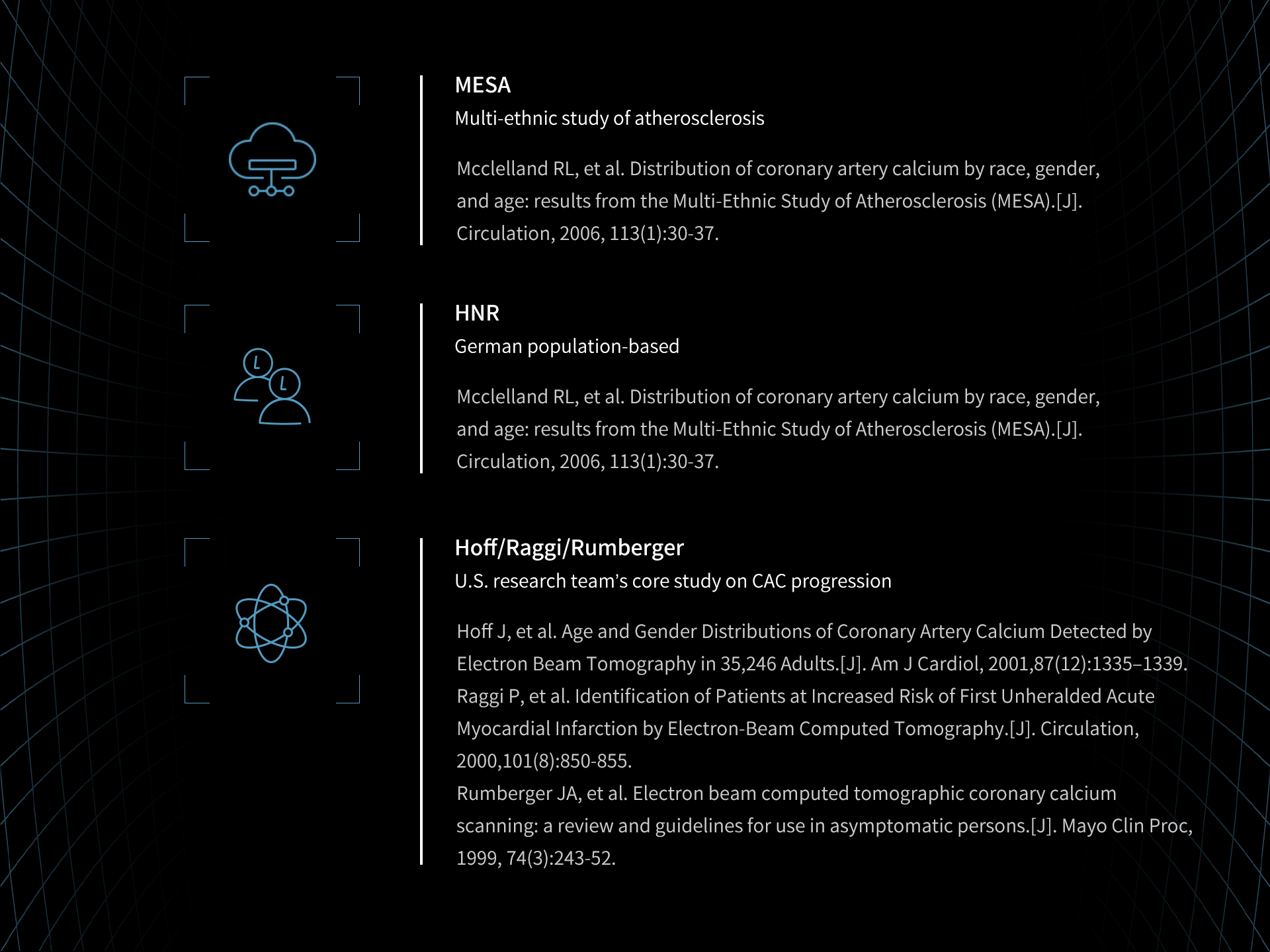
With multiple databases available, radiologists can select the most appropriate reference cohort thereby improving statistical precision. By incorporating a patient's age, sex, and ethnicity into the chose database, risk assessments can be performed with the percentage reference to the entire database, supporting more confident treatment decisions.


Multiple Database for Better Reference

With multiple databases available, radiologists can select the most appropriate reference cohort thereby improving statistical precision. By incorporating a patient's age, sex, and ethnicity into the chose database, risk assessments can be performed with the percentage reference to the entire database, supporting more confident treatment decisions.

uOmnispace™ also allows quick batch-saving of calcified image slice-by-slice along with the calcium score tables and percentage chart. By streamlining the saving process, it could reduce the redundant operations and, therefore, further enhances clinical efficiency.

Easy Save

uOmnispace™ also allows quick batch-saving of calcified image slice-by-slice along with the calcium score tables and percentage chart. By streamlining the saving process, it could reduce the redundant operations and, therefore, further enhances clinical efficiency.

Calcium Scoring Image Review
Calcium scoring allows automatic highlighting the calcification and categorizing them to the corresponding coronary across all slices.
Calcium Scoring Image Review
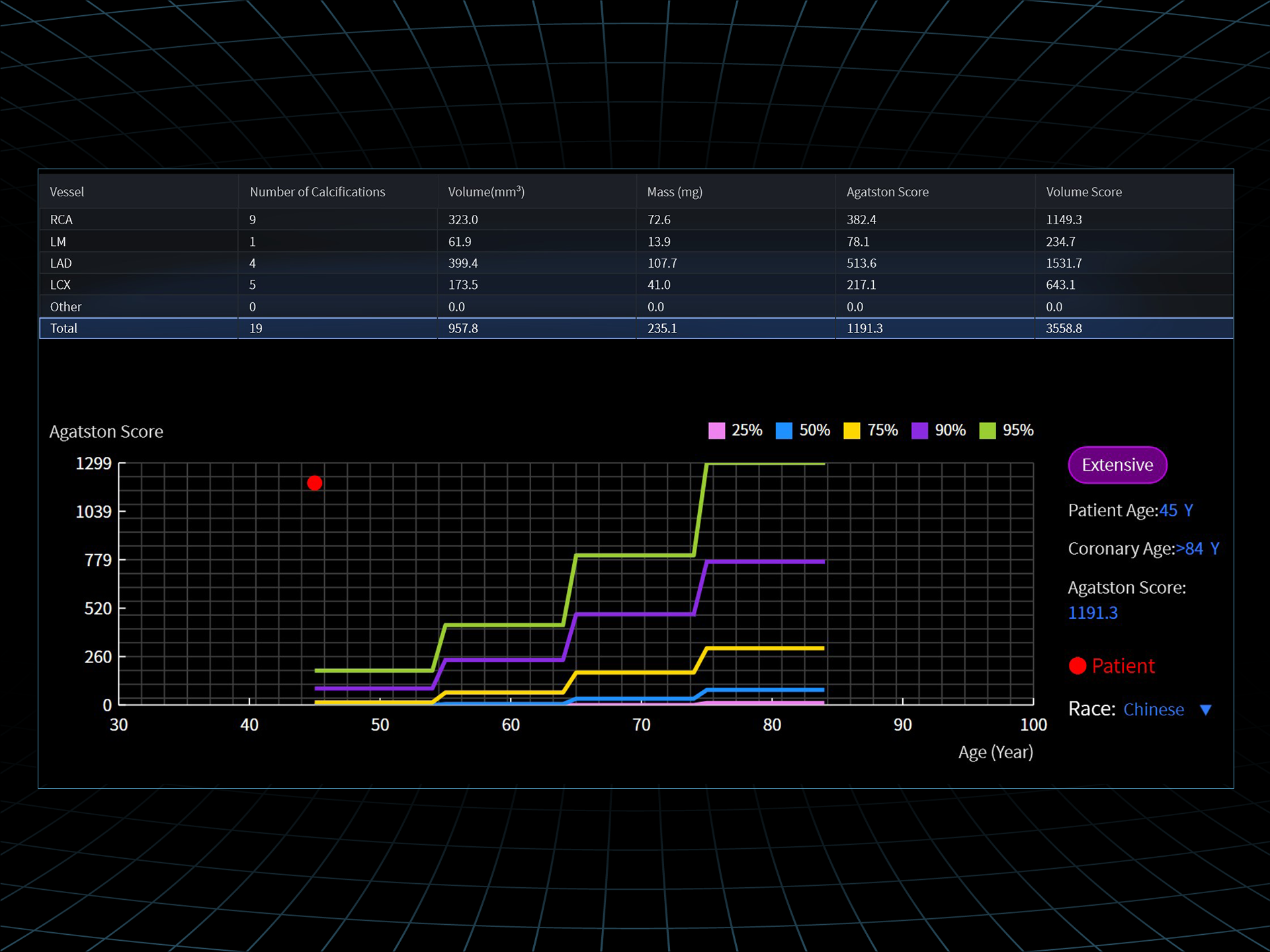
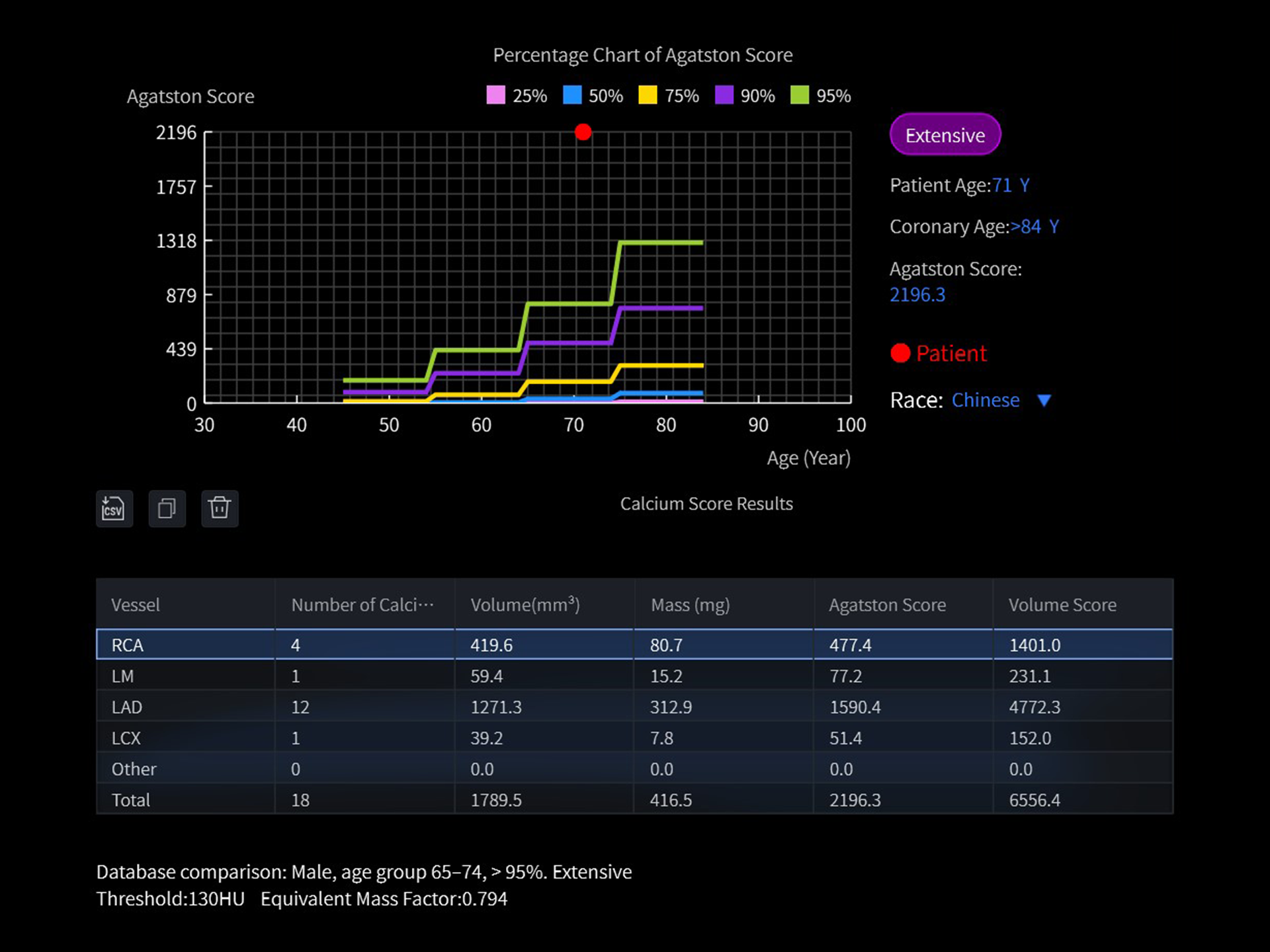
A thorough quantitative analysis including the number of calcifications, the volume, mass and Agatston score of the calcification could be concluded. Moreover, a visual chart is displayed with various percentiles to better present the extend of calcification with the referred database.
Calcium Scoring Image Review
Calcium scoring allows automatic highlighting the calcification and categorizing them to the corresponding coronary across all slices.
Calcium Scoring Image Review
A thorough quantitative analysis including the number of calcifications, the volume, mass and Agatston score of the calcification could be concluded. Moreover, a visual chart is displayed with various percentiles to better present the extend of calcification with the referred database.